OUR MANIFESTO

It all starts with a spark.

A belief that cities are living systems, and that ideas can shape places and lives.

For 30 years, Apsys has been building differently: tailor-made projects, rooted in their territories, designed with those who live, work and move there.

Not just spaces, but lasting, meaningful places. Behind every project, there is a collective. Dreamers with plans. Builders with purpose.

Because transforming a city means listening, acting responsibly and committing for the long run.

As the world reinvents itself, our ambition remains clear: to keep daring, creating and dreaming with impact.

Because the greater the challenges facing our cities, the stronger our dreams must be.

Discover who we are

30

YEARS OF EXPERIENCE

20+

CITIES IN POLAND AND FRANCE

1M

SQUARE METERS BUILT

150

AWARDS WON

THREE PILLARS

Foundations of our vision

01 THE COLLECTIVE

Nothing great is built alone.

Tailor-made projects are born from shared visions.

Apsys’ story is one of collaboration: teams, partners, cities, designers, operators, residents. Celebrating 30 years means opening up. Showing the how, not just the what.
The making-of rather than the final image.

Behind every place, there are shared challenges, risks and shared dreams.
This pillar celebrates the human fabric of Apsys. The collective intelligence that turns ambition into reality.

02 THE CITY BY APSYS

The future is shaped today.

This is our vision.

Shaping cities through places deeply rooted in their territories, culturally, socially and environmentally.

Each project is tailor-made, born from its context: revitalising what already exists, revealing the value of history, and building on local resources rather than starting from scratch.

We’ve always been ESG-driven, it is a method: designing mixed, inclusive and resilient places, made to evolve over time.

Dreaming big for Apsys, isn’t just about scale but how impactful our projects can be. It’s about building cities that feel alive today and still make sense tomorrow.

03 CREATIVITY

Offer living experiences

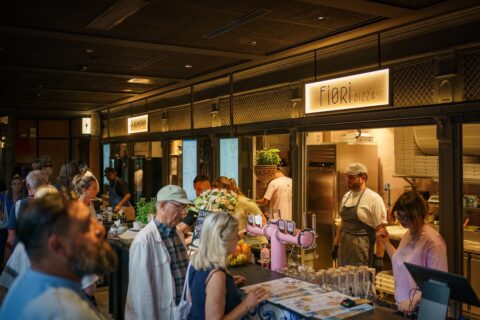
Beyond architecture, we creates places in motion, places for everyone. This idea accompanies us during the whole designing process to offer spaces where people meet, linger, play, express themselves, and make memories.

Art installations, events, rooftops, markets, culture, everyday moments…

From large gestures to small details, Apsys injects energy, creativity and emotion into the city. This pillar celebrates the vibrant side of the brand: the buzz, the surprises, everything that turns a place into a destination.

Because a city is meant to be lived.

News & updates

Latest annoucements

10 April 2026
History as a compass. How Apsys restores identity and energy to places

For three decades, Apsys has specialised in projects in which investment ambitions – the desire to create places of lasting value – go hand in hand with humility towards the surroundings, the history of a place and its social role. Such investments require not only knowledge and experience, but also commitment and the conviction that urban development begins with understanding the identity of a place. This approach is reflected in the projects currently being carried out – the multi-dimensional revitalisation of Hala Targowa in Gdańsk and the residential development Nowa Stawowa in Wrocław.

Every revitalisation process undertaken by Apsys begins with asking the following questions: what was here before, what did this place once mean to people and to the city, what does it mean today, and what role should it play in the future? Obtaining the answers requires in-depth analyses and research, cooperation with experts and dialogue with local partners. This approach stems from the belief that responsible revitalisation is not only an investment process, but also a long-term commitment to the city and its people.

Rooted in the past

Historical research is an integral part of the revitalisation process. Its purpose is to reconstruct the facts reliably and to understand the mechanisms that have shaped a given place over the years. This research makes it possible to uncover the various meanings of a place related to its architecture, function, social role and the everyday practices of its users. Often, this is knowledge previously unknown even to historians themselves. It is precisely this knowledge that becomes the starting point for further design decisions. Historical knowledge organises the process and gives it direction: it helps determine which elements of a place’s identity are worth preserving, which can be developed and which require a new interpretation in response to the contemporary needs of cities and communities.

Dialogue carried out in parallel with public institutions, city representatives, experts and other stakeholders is also of key importance. Thanks to this, the project is created not only on the basis of source materials, but also with regard to the current social and functional context. The knowledge built in this way is then translated into specific architectural solutions, the functions of the building and the way the space is used.

Webegin work on each new project by defining its identity. It is created as a result of research and meticulous analyses, discussions and cooperation between many people both within and outside the organisation, as well as conscious design decisions. We believe that this path, although longer, makes it possible to create places that live on for years, says Agnieszka Tomczak Tuzińska, Marketing Director at Apsys Polska.

Building the present

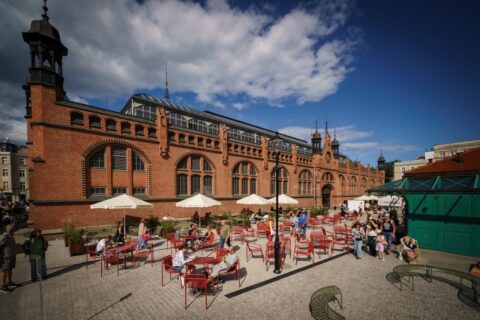
An example of a project in which responsibility for heritage is combined with thinking about the future role of a place within the structure of the city is the revitalisation of Hala Targowa. This is not only a historic building, but also a space located in one of the most important points of Gdańsk. For Apsys, carrying out this investment means responsibility that goes beyond the standard development process – it is a mission to bring back to life a fragment of the urban fabric of historical and social significance. Specialist historical research for Hala Targowa was prepared by Dr Magdalena Staręga from the University of Gdańsk. The research carried out made it possible not only to organise the history of the building itself, but also to understand its broader context – as a space of trade, everyday meetings and urban activity. Already at the time of its opening in 1896, Hala was a very modern facility for its time, and not only in architectural terms. It operated according to rules and solutions that are now very well known and successfully applied in the retail market. Stalls in Hala Targowa were grouped according to product categories (clustering). In addition to permanent stalls, there were also islands with changing assortments – equivalents of today’s pop-ups. Revenue in Hala was generated not only from renting retail units, but also from fees for using the freight lift, public scales, basement storage space and staff rooms. What is more, Hala was never only a place of trade and transactions. Already in the 19th century, it had a “mushroom advisory point”, where people could go if they had doubts about the edibility of gathered mushrooms, as well as a first aid point. Sporting events were also organised there, such as boxing matches. One of the first venues opened 130 years ago was a restaurant – a place for meetings, conversations and rest. Engagement in the life of the city and its residents was natural at Hala Targowa from the very beginning. This knowledge became the foundation for Apsys’s design decisions, as the company continues the natural heritage of the place: trade, gastronomy, meetings and engagement in the everyday life of Gdańsk.

From the very beginning, the revitalisation process has been carried out in close cooperation with public institutions and under conservation supervision, which ensures consistency between investment ambition and the protection of historical heritage. Apsys’s goal is not simply to renovate the building, but to restore the role it once played in the life of the city.

Understanding the place

This approach to revitalisation is not limited only to large projects such as Hala Targowa or Manufaktura – the flagship Apsys investment that already two decades ago showed that revitalisation carried out with respect for history can make a place a catalyst for reviving a city. At the same time, it does not exclude care and attention to the identity of a place, as exemplified by the Factory Museum presenting the history of Izrael Poznański’s factory-residential complex.

In the case of the Wrocław residential development Nowa Stawowa, the starting point was also an in-depth analysis of the history and character of the place. Historical research revealed layers that give this location its unique character. Before dense urban development appeared here in the 19th century, the area belonged to the recreational and horticultural outskirts of Wrocław – full of orchards, gardens and ponds. Over the following decades, the quarter between Stawowa, Kościuszki, Kołłątaja and Rejtana streets served a variety of functions, including a furniture factory, a biscuit factory, a wholesaler of paper and office supplies, craft workshops and tenement houses inhabited by representatives of many professions and communities. This multi-layered character became an inspiration both for the architectural concept by Łapacz Winkowski Architekci and for the design of the common areas by Boris Kudlicki. Nowa Stawowa and the neighbouring Ogrody Staromiejskie restore the location’s original green character: together they include more than 1,300 sqm of carefully designed greenery in the form of pocket gardens, green courtyards and places to relax. The diversity of the place will also be reflected in the apartment structure – from intimate units to the most spacious, duplex apartments. Apsys is creating a place to live for people with different needs and lifestyles, just as for decades this quarter brought together various communities and witnessed many different human stories.

Although the scale of the projects differs, the philosophy remains the same: first to thoroughly understand and get to know the place, and then to create it anew with respect for its history.

The Apsys approach, based on historical research, social dialogue and responsible design, translates into measurable benefits for all participants in the process. Cities gain projects rooted in the local context – spaces with character that strengthen the existing urban fabric. For public institutions, this means cooperation with an entity that bases its decisions on facts, analyses and a transparent process. A coherent vision, built around the identity of a place and its future role in the structure of the city, significantly facilitates making decisions that will have a real impact on the quality of urban life in the years to come. In turn, tenants and business partners receive more than just attractive commercial space. The history of a place becomes a concrete tool for building competitive advantage. In a world where new projects are created at a rapid pace, an authentic story about a property becomes a real advantage: something that cannot be copied or transferred elsewhere. The beneficiaries also include users, both of commercial and residential spaces. They are the ones who experience on a daily basis spaces with real character – places where contemporary functionality and energy are combined with historical memory.

Over 30 years of activity, Apsys has consistently carried out projects based on the same philosophy: ambitiously, responsibly, with respect for history and the local context. The identity of a place, cooperation with experts and conversations with local partners shape every Apsys project and build the foundation of its long-term value.

25 March 2026
New Life for Urban Quarters. Apsys Begins Revitalisation in Wrocław

Apsys Polska is bringing a post-industrial site in the centre of Wrocław back to life through two unique residential projects – Nowa Stawowa and Ogrody Staromiejskie. Both developments are being built on a degraded former industrial area that had been excluded from city life for years and is now regaining its significance. Construction works began in early 2026, with completion scheduled for Q4 2027.

These projects are further examples of Apsys’s approach to revitalisation, understood as restoring neglected or previously inaccessible areas to urban and social use. Nowa Stawowa and Ogrody Staromiejskie are being developed in the very centre of the city, on the site of former industrial buildings located between Stawowa, Kościuszki, Kołłątaja and Rejtana streets. The revitalisation includes restoring the urban order of this part of the city centre, adapting the buildings and redesigning the spaces between them.

From a Former Factory to Modern Homes

The Nowa Stawowa project includes two early-20th-century post-industrial buildings that will be transformed into 54 stylish lofts. The most important architectural elements of historical value will be preserved, including brick façades, original ceilings, fragments of the roof truss and the roof layout with its characteristic dormer windows. An integral part of the project will also be large panoramic windows with clearly defined muntins, referencing the original character of the buildings and bringing daylight into interiors with ceiling heights of up to 3.5 metres. All apartments – from compact units under 30 sqm to spacious interiors exceeding 100 sqm – have been designed to maximise natural light and allow for full freedom of arrangement. Residents of the top floors will enjoy private terraces with views of the city skyline, while ground-floor residents will have their own gardens. The project also includes underground parking, bicycle storage and modern step-free lifts serving all floors.

Ogrody Staromiejskie, in turn, is a complex of three buildings ranging from five to seven storeys, harmoniously integrated into the historic context of the area and designed to balance built-up space with shared areas. The development will include 63 apartments ranging from 25 to 120 sqm, including spacious duplex apartments with above-standard ceiling heights. Large windows, terraces and private gardens will provide natural light and a sense of space.

“Our goal is to create projects that transform urban space. , We work with places that have their own history, and we try to read it and inscribe it into a new story of the city. Revitalisation is not only about bringing a place back to life, but also about taking responsibility for how that life will unfold there – in harmony with nature, history and the needs of residents,” says Katarzyna Dziurnikowska, Investment Director at Apsys Polska.mówi Katarzyna Dziurnikowska, Dyrektorka ds. Inwestycji Apsys Polska.

A City That Breathes History and Greenery

The development stands out for its deliberately designed greenery, which forms an integral part of the entire urban concept. Both projects are linked by a shared network of open spaces, designed as a sequence of green courtyards, walking paths and gardens accessible to residents of the whole complex. Just a 2–3-minute walk from the city centre, it has been possible to create a unique urban layout with pocket gardens, green courtyards and quiet zones that ensure peace and comfort in everyday life. Ogrody Staromiejskie will feature an urban garden covering approx. 550 sqm of greenery, with plantings of several species of trees and shrubs. Nowa Stawowa, in turn, offers carefully composed greenery and leisure zones covering 750 sqm, with plants selected both for their aesthetics and their microclimatic functions.

Nowa Stawowa and Ogrody Staromiejskie are another example of Apsys’s ambition to create places that combine history, sustainability and the contemporary needs of residents. These are not only new addresses on the map of Wrocław, but above all a thoughtful concept that restores neglected areas to the city and reintegrates them into the urban fabric, combining the energy of the centre with a sense of intimacy and everyday comfort. The developments are also aligned with the city’s development directions set out in the Wrocław 2050 strategy, which places emphasis on revitalisation, sustainable spatial development and cooperation with local communities.

In the design process, Apsys combined modern urban trends with respect for the local context and high environmental standards. Solutions compliant with the Do No Significant Harm (DNSH) principle have been applied, including rainwater retention, low-emission materials, energy-efficient technologies and greenery supporting the local microclimate. The developments are being created in the spirit of ESG – with respect for history, the environment and future generations. Special acoustic partitions and anti-vibration pads have also been introduced between staircases and apartments, reducing the transfer of noise and vibrations. Both projects are planned to undergo Zielony Dom certification, confirming their environmental and social character.

“Nowa Stawowa and Ogrody Staromiejskie are developments that show that revitalisation can be an expression of care for the city and a smart way of developing it, while also being a bold look into the future. We want to create spaces where residents feel they are part of a living, changing city. This is how we understand the idea ‘Together, another city is possible’ – a city that is open, sustainable and sensitive to the needs of people and the environment,” says Agnieszka Tomczak-Tuzińska, Marketing Director at Apsys Polska.

Together, Another City Is Possible

The two projects are being delivered by renowned architectural studios – Łapacz Winkowski Architekci (building architecture), Boris Kudlička with Partners (common areas in Nowa Stawowa and Ogrody Staromiejskie) and IKROPKA (greenery and recreational spaces). The general contractor is MIRBUD S.A. – one of the largest and most respected construction companies in Poland, active on the market for nearly 40 years, with experience in delivering residential, commercial, public-use and road and rail infrastructure projects across the country.

“We are pleased to be part of these exceptional projects. Nowa Stawowa and Ogrody Staromiejskie are developments that require a combination of experience, precision and modern technologies. A particular challenge, which we are pleased to undertake, is working with the existing fabric – with respect for historic walls, structures and architectural details of heritage value. Nowa Stawowa and Ogrody Staromiejskie are MIRBUD’s next projects in Wrocław, confirming our experience in carrying out complex revitalisation projects in a demanding urban environment,” says Paweł Bruger, Director of Corporate Communications at MIRBUD S.A., potwierdzające nasze doświadczenie w prowadzeniu złożonych projektów rewitalizacyjnych w wymagającym środowisku miejskim

Nowa Stawowa and Ogrody Staromiejskie are another stage in the consistent activity of Apsys Polska as a developer specialising in revitalisation projects. Following successful developments such as Manufaktura in Łódź and the ongoing revitalisation of Hala Targowa in Gdańsk, the company is also expanding its presence in the residential market. The Wrocław developments are the next projects, after Solea in Warsaw, to align with the direction Apsys is pursuing. Completion of both investments is planned for Q4 2027.

12 February 2026
1996–2026: 30 Years of Apsys The future belongs to those who build cities

Thirty years ago to this very day, on February 12, 1996, I officially founded Apsys, driven by the desire to dream big. In 2026, that ambition remains fully intact, with a year marked by a wealth of truly exceptional projects. We could not imagine a better way to celebrate our anniversary than by dreaming even bigger.

First, this summer, we head to Poland with the opening of Hala Targowa in Gdańsk. In the heart of the “Pearl of the Baltic,” we are rehabilitating a 19th-century market hall—a jewel of brick, glass, and steel—that will undoubtedly become a gourmet food hall unlike anything Europe has ever seen. Then, in September, we return to the Paris region with the handover of the “Maison du Peuple” to Alain Ducasse. One of the world’s great culinary icons has chosen Apsys to create his headquarters, a showcase of French cuisine for the world to see.

“The company will double in size over the next five years.”

As for our projects currently under development, construction is beginning at Coeur Paris, the former historic headquarters of the AP-HP (Assistance Publique Hôpitaux de Paris), which will become a mixed-use complex in a truly iconic location. How many buildings can claim neighbors such as City Hall, the Saint-Jacques Tower, the Seine, and Notre-Dame de Paris? At the same time, in Bordeaux, Canopia is gradually revealing its silhouette. Spanning four hectares between Gare Saint-Jean and the Garonne, a grand Haussmann-style thoroughfare (a « cours ») is beginning to take shape, around which the stone façades of the future district are slowly rising. For each of these two projects, investment amounts to nearly half a billion euros.

Hala Targowa, the future landmark gourmet food hall of Gdańsk (Poland). Opening in summer 2026.

The list of forthcoming developments is far from exhaustive, as at our current growth rate the company will double in size over the next five years. For those who knew Apsys in its early days, when I launched the business with just six months of cash flow, the transformation has been nothing short of spectacular. How was all this possible? One could answer with the famous line from the movie The Leopard: “Everything must change so that nothing may

change.” While Apsys has become a success story that has continued to grow, its fundamentals remain, like the four cardinal points of a compass.

When retail arrives, the city comes alive, life returns

The first cardinal point is our unwavering belief in the “superpower” of retail. In the late 1990s in Poland, where the Apsys adventure began, I remember my first trips to Wrocław and Łódź (the country’s fourth- and second-largest urban areas respectively)—cities drained and stifled by decades of socialism. Above all, I remember the extraordinary breath of life brought by the opening of Korona and Manufaktura. When retail arrives, the city comes alive, life returns. This observation was true in my parents’ and grandparents’ time as shopkeepers and remains valid today – perhaps even more so. In an age marked by withdrawal into oneself, there is a vital need to mend social bonds. At our scale, our sites contribute to this, and at Apsys we firmly believe that we are doing meaningful work by designing places that bring people together.

In France, this regenerative “superpower” has proven itself through the transformation of once inhospitable urban areas. I could mention Muse in Metz or Steel in Saint-Étienne, but the most emblematic example remains Beaugrenelle, inaugurated in 2013. Located in Paris’s 15th district, just a few hundred meters from the Eiffel Tower, the site had been condemned to isolation by the slab-based urban planning characteristic of the Front de Seine. Few Parisians – and even fewer tourists – ventured there. By opening a commercial thoroughfare between the city and the Seine and creating a contemporary version of the Parisian department store, we reawakened a neighborhood that now welcomes sixteen million visitors a year – almost three times as many as the Eiffel Tower.

Revealing the spirit of place

The second cardinal point is the primacy of what we call the genius loci, the spirit of the place. In Łódź, with Manufaktura, which opened in 2006 and hosts over 300 stores, three museums, a hotel, cinemas, and a kids’city developed with the Cité des Sciences in Paris, all across 200,000 square meters – the rehabilitation of the former textile factory that once generated the city’s wealth did more than revive a brownfield site and enhance a superb brick architecture. It helped heal the wounded pride of a city able at last to turn the page on its decline. It was also an honor to bring back to life a symbol of Łódź’s multicultural history, a major center of the Polish Jewish community.

“The greatest compliment our projects can receive is that they fade into the background behind the spirit of the place, allowing it to shine.”

At the opening, I was deeply moved by a resident who shared her emotion at seeing a foreign group rehabilitate, with such attention to detail, care, and quality, this industrial site that had shaped local life. It was simply exceptional. Contrary to common perceptions of our profession as builders, the greatest compliment our projects can receive is that they fade into the background behind the spirit of the place, allowing it to be fully revealed.

To build also means not building, but designing and bringing places to life

This conviction has another direct implication. Since a city’s identity is defined as much by its streets, squares, and gardens as by its buildings, the care given to what lies outside the

buildings is paramount. This is our third cardinal point. To build also means not building, but designing. Too often, outdoor spaces have been treated as mere decorative elements – an added touch of soul. Our approach is the exact opposite: they are the soul of the place. This is how the public truly takes ownership of a site, especially when we animate it with pieces of art and a rich program of events. When a neighborhood is attractive in its own right, the economic success of what lies within its buildings naturally follows.

After Manufaktura, built around a three-hectare public square, larger than the Cour Napoléon of the Louvre museum in Paris, Canopia will be the most accomplished illustration of this approach, with the creation of three streets, two small squares, a garden, two esplanades, and a grand Bordeaux-style cours opening onto a two-hectare public park. In total, six hundred trees will be planted across this largely pedestrian district, turning it into a “cool island,” where temperatures will be up to 12°C lower during future heatwaves, according to a scientific study conducted with The Climate Company. A necessity, as Bordeaux is expected to have the climate of Seville by 2050.

Coeur Paris, the former historic headquarters of the AP-HP, transformed into a “mission-driven building” combining offices, social housing, retail, and social-economy activities. Opening in 2028.

The future belongs to those who build cities

This particular attention to place leads us to our final and most important cardinal point – the one that points north. At Apsys, the urban vision always prevails over constraints, whether technical or financial.

At Korona in Wrocław, Apsys’s very first project, choosing the ideal location required relocating a logistics company employing five thousand people. From the very beginning, the tone was set: nothing is impossible at Apsys. At Beaugrenelle, our project won the competition despite requiring an initial investment twice as high as that of our competitors. At Neyrpic near Grenoble, after the French Council of State validated our building permit in 2018 following years of legal proceedings, we decided to start again from a blank page because the plans we ourselves had designed in 2004 no longer seemed adequate. At Canopia,

we chose to reduce buildable areas below the authorized limit in order to achieve better harmony with the historic city center. There are countless examples of such choices, far more costly in the short term, that ultimately prove successful in the long run, from an urban standpoint, and also financially. Because only the right urban vision guarantees resilience.

“Urban integrators have a bright future ahead.”

This long-term mindset stems from our DNA as a family-owned company, as we know that true value is what endures over time. This is what led us, in 2014, to transform our model from that of a developer to that of a property development company, and in 2018 to assume the role of an urban integrator, bringing together the roles of planner, developer, investor, and operator. In other words, we acquire land, design streets, squares, and parks, construct buildings, retain ownership, lease spaces, and animate the neighborhood through a rich artistic and events program. By controlling the entire value chain, we not only make far more ambitious design choices – because one always builds better when building for oneself – but we also create the conditions for vibrant neighborhood life. We are firmly convinced that this model is destined to grow, as it is virtuous for urban development, for the company, for local authorities, and for residents alike. Urban integrators have a bright future ahead; the future belongs to those who build cities.

In Bordeaux, the Canopia district and its central planted Cours. A Haussmann-style thoroughfare between Gare Saint-Jean and the Garonne. Opening in 2027.

I would have so loved, in sharing these convictions, to name each and every person who took part in this extraordinary human and entrepreneurial adventure. My heart is filled with gratitude, and while this format does not allow me to thank them individually, I hope they know how deeply grateful I am.

Gratitude and encouragement, for our thirty years are only the beginning of the journey. Over the next thirty years, without ever abandoning our compass, we will continue to dream bigger.

Contact

POLAND

Q22 Office
Aleja Jana Pawła II 22
00-133 Warsaw Poland

+48 (22) 70 12 00

FRANCE

28-32 Av. Victor Hugo,
75116 Paris
France

+33 (0)1 44 05 77 77