

1996–2026: 30 Years of Apsys The future belongs to those who build cities

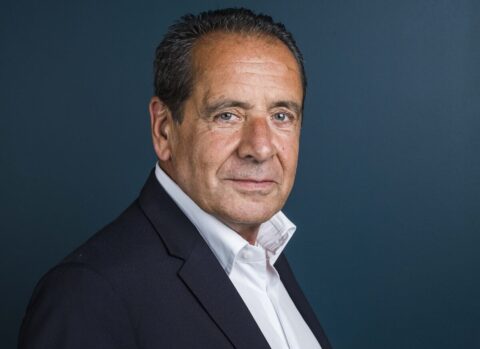
Thirty years ago to this very day, on February 12, 1996, I officially founded Apsys, driven by the desire to dream big. In 2026, that ambition remains fully intact, with a year marked by a wealth of truly exceptional projects. We could not imagine a better way to celebrate our anniversary than by dreaming even bigger.
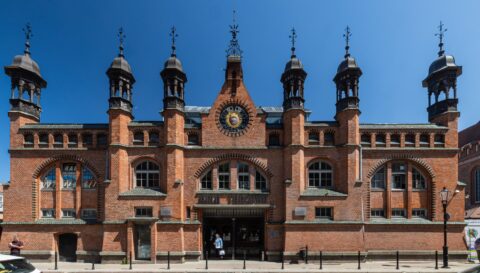
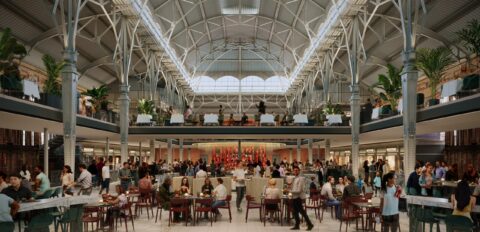
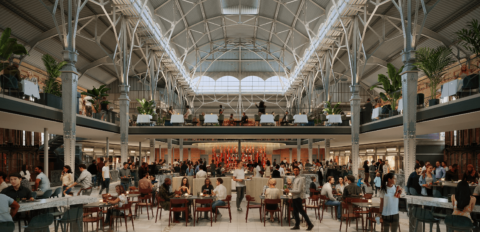
First, this summer, we head to Poland with the opening of Hala Targowa in Gdańsk. In the heart of the “Pearl of the Baltic,” we are rehabilitating a 19th-century market hall—a jewel of brick, glass, and steel—that will undoubtedly become a gourmet food hall unlike anything Europe has ever seen. Then, in September, we return to the Paris region with the handover of the “Maison du Peuple” to Alain Ducasse. One of the world’s great culinary icons has chosen Apsys to create his headquarters, a showcase of French cuisine for the world to see.
“The company will double in size over the next five years.”
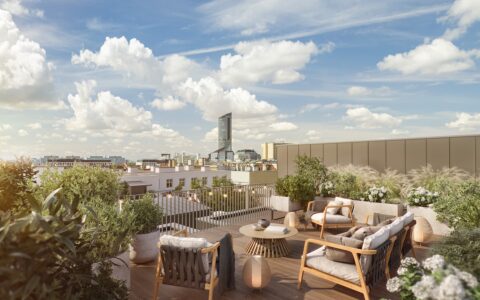
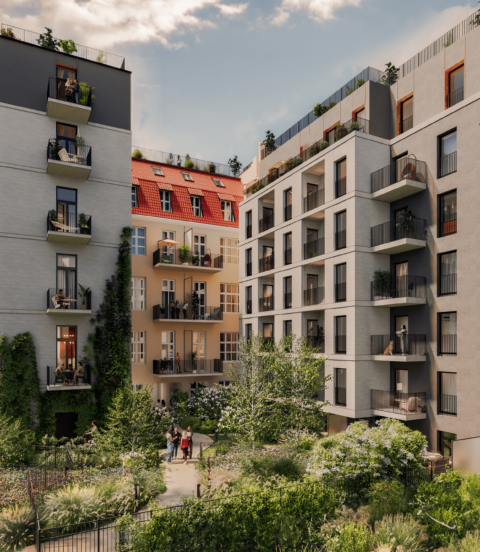
As for our projects currently under development, construction is beginning at Coeur Paris, the former historic headquarters of the AP-HP (Assistance Publique Hôpitaux de Paris), which will become a mixed-use complex in a truly iconic location. How many buildings can claim neighbors such as City Hall, the Saint-Jacques Tower, the Seine, and Notre-Dame de Paris? At the same time, in Bordeaux, Canopia is gradually revealing its silhouette. Spanning four hectares between Gare Saint-Jean and the Garonne, a grand Haussmann-style thoroughfare (a « cours ») is beginning to take shape, around which the stone façades of the future district are slowly rising. For each of these two projects, investment amounts to nearly half a billion euros.
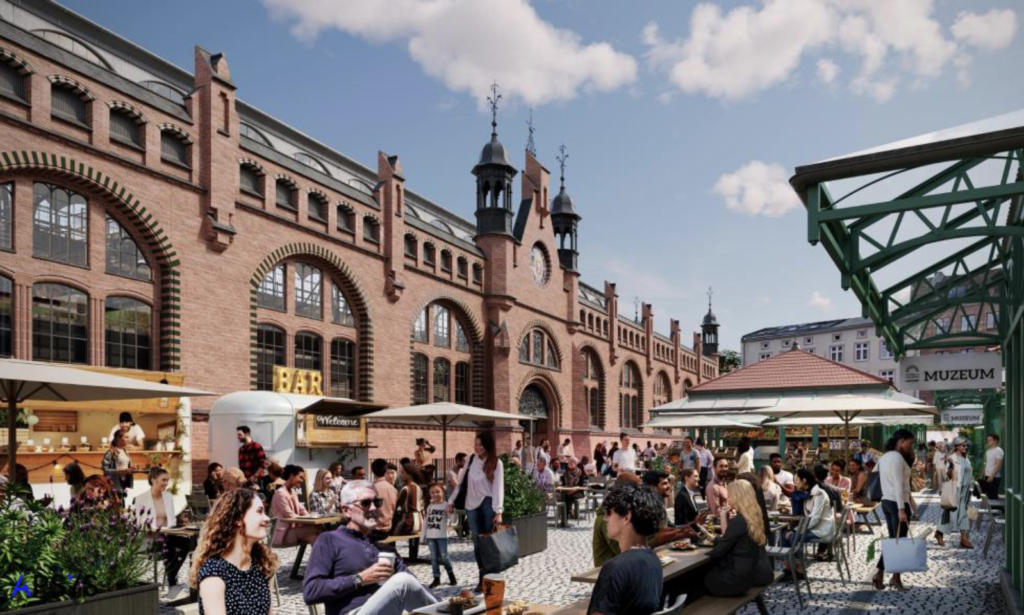
Hala Targowa, the future landmark gourmet food hall of Gdańsk (Poland). Opening in summer 2026.
The list of forthcoming developments is far from exhaustive, as at our current growth rate the company will double in size over the next five years. For those who knew Apsys in its early days, when I launched the business with just six months of cash flow, the transformation has been nothing short of spectacular. How was all this possible? One could answer with the famous line from the movie The Leopard: “Everything must change so that nothing may
change.” While Apsys has become a success story that has continued to grow, its fundamentals remain, like the four cardinal points of a compass.
When retail arrives, the city comes alive, life returns
The first cardinal point is our unwavering belief in the “superpower” of retail. In the late 1990s in Poland, where the Apsys adventure began, I remember my first trips to Wrocław and Łódź (the country’s fourth- and second-largest urban areas respectively)—cities drained and stifled by decades of socialism. Above all, I remember the extraordinary breath of life brought by the opening of Korona and Manufaktura. When retail arrives, the city comes alive, life returns. This observation was true in my parents’ and grandparents’ time as shopkeepers and remains valid today – perhaps even more so. In an age marked by withdrawal into oneself, there is a vital need to mend social bonds. At our scale, our sites contribute to this, and at Apsys we firmly believe that we are doing meaningful work by designing places that bring people together.
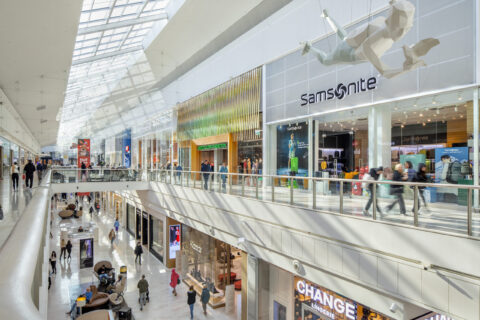
In France, this regenerative “superpower” has proven itself through the transformation of once inhospitable urban areas. I could mention Muse in Metz or Steel in Saint-Étienne, but the most emblematic example remains Beaugrenelle, inaugurated in 2013. Located in Paris’s 15th district, just a few hundred meters from the Eiffel Tower, the site had been condemned to isolation by the slab-based urban planning characteristic of the Front de Seine. Few Parisians – and even fewer tourists – ventured there. By opening a commercial thoroughfare between the city and the Seine and creating a contemporary version of the Parisian department store, we reawakened a neighborhood that now welcomes sixteen million visitors a year – almost three times as many as the Eiffel Tower.
Revealing the spirit of place
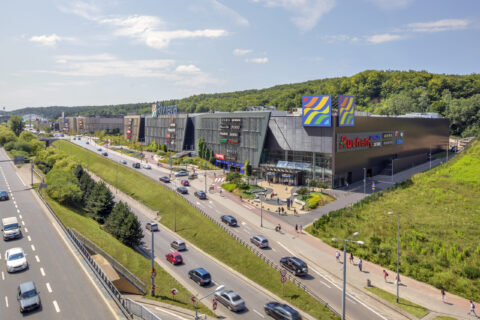
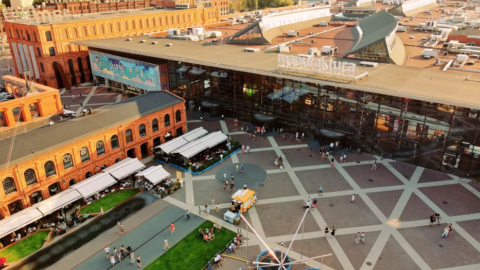
The second cardinal point is the primacy of what we call the genius loci, the spirit of the place. In Łódź, with Manufaktura, which opened in 2006 and hosts over 300 stores, three museums, a hotel, cinemas, and a kids’city developed with the Cité des Sciences in Paris, all across 200,000 square meters – the rehabilitation of the former textile factory that once generated the city’s wealth did more than revive a brownfield site and enhance a superb brick architecture. It helped heal the wounded pride of a city able at last to turn the page on its decline. It was also an honor to bring back to life a symbol of Łódź’s multicultural history, a major center of the Polish Jewish community.
“The greatest compliment our projects can receive is that they fade into the background behind the spirit of the place, allowing it to shine.”
At the opening, I was deeply moved by a resident who shared her emotion at seeing a foreign group rehabilitate, with such attention to detail, care, and quality, this industrial site that had shaped local life. It was simply exceptional. Contrary to common perceptions of our profession as builders, the greatest compliment our projects can receive is that they fade into the background behind the spirit of the place, allowing it to be fully revealed.
To build also means not building, but designing and bringing places to life
This conviction has another direct implication. Since a city’s identity is defined as much by its streets, squares, and gardens as by its buildings, the care given to what lies outside the
buildings is paramount. This is our third cardinal point. To build also means not building, but designing. Too often, outdoor spaces have been treated as mere decorative elements – an added touch of soul. Our approach is the exact opposite: they are the soul of the place. This is how the public truly takes ownership of a site, especially when we animate it with pieces of art and a rich program of events. When a neighborhood is attractive in its own right, the economic success of what lies within its buildings naturally follows.
After Manufaktura, built around a three-hectare public square, larger than the Cour Napoléon of the Louvre museum in Paris, Canopia will be the most accomplished illustration of this approach, with the creation of three streets, two small squares, a garden, two esplanades, and a grand Bordeaux-style cours opening onto a two-hectare public park. In total, six hundred trees will be planted across this largely pedestrian district, turning it into a “cool island,” where temperatures will be up to 12°C lower during future heatwaves, according to a scientific study conducted with The Climate Company. A necessity, as Bordeaux is expected to have the climate of Seville by 2050.
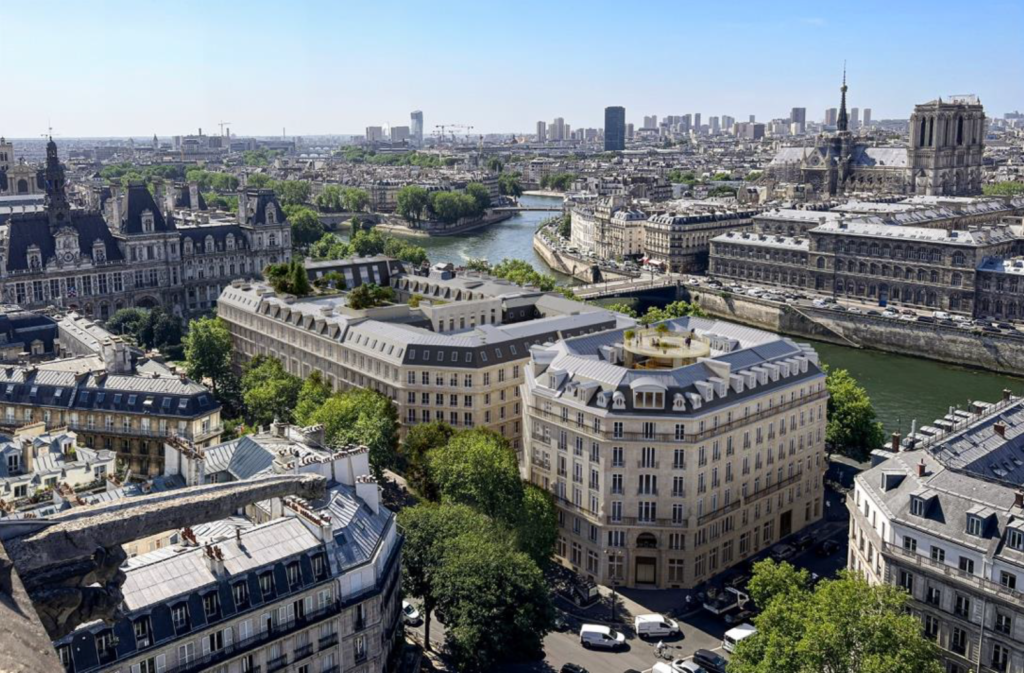
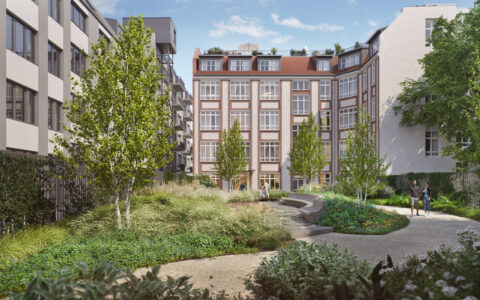
Coeur Paris, the former historic headquarters of the AP-HP, transformed into a “mission-driven building” combining offices, social housing, retail, and social-economy activities. Opening in 2028.
The future belongs to those who build cities
This particular attention to place leads us to our final and most important cardinal point – the one that points north. At Apsys, the urban vision always prevails over constraints, whether technical or financial.
At Korona in Wrocław, Apsys’s very first project, choosing the ideal location required relocating a logistics company employing five thousand people. From the very beginning, the tone was set: nothing is impossible at Apsys. At Beaugrenelle, our project won the competition despite requiring an initial investment twice as high as that of our competitors. At Neyrpic near Grenoble, after the French Council of State validated our building permit in 2018 following years of legal proceedings, we decided to start again from a blank page because the plans we ourselves had designed in 2004 no longer seemed adequate. At Canopia,
we chose to reduce buildable areas below the authorized limit in order to achieve better harmony with the historic city center. There are countless examples of such choices, far more costly in the short term, that ultimately prove successful in the long run, from an urban standpoint, and also financially. Because only the right urban vision guarantees resilience.
“Urban integrators have a bright future ahead.”
This long-term mindset stems from our DNA as a family-owned company, as we know that true value is what endures over time. This is what led us, in 2014, to transform our model from that of a developer to that of a property development company, and in 2018 to assume the role of an urban integrator, bringing together the roles of planner, developer, investor, and operator. In other words, we acquire land, design streets, squares, and parks, construct buildings, retain ownership, lease spaces, and animate the neighborhood through a rich artistic and events program. By controlling the entire value chain, we not only make far more ambitious design choices – because one always builds better when building for oneself – but we also create the conditions for vibrant neighborhood life. We are firmly convinced that this model is destined to grow, as it is virtuous for urban development, for the company, for local authorities, and for residents alike. Urban integrators have a bright future ahead; the future belongs to those who build cities.
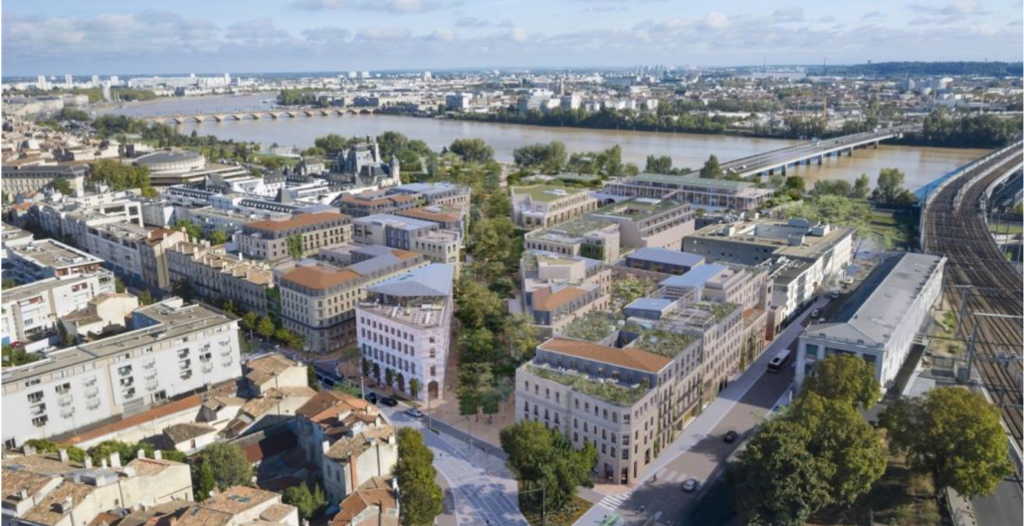
In Bordeaux, the Canopia district and its central planted Cours. A Haussmann-style thoroughfare between Gare Saint-Jean and the Garonne. Opening in 2027.
I would have so loved, in sharing these convictions, to name each and every person who took part in this extraordinary human and entrepreneurial adventure. My heart is filled with gratitude, and while this format does not allow me to thank them individually, I hope they know how deeply grateful I am.
Gratitude and encouragement, for our thirty years are only the beginning of the journey. Over the next thirty years, without ever abandoning our compass, we will continue to dream bigger.