

The art is not to lease everything. The art is to lease wisely.
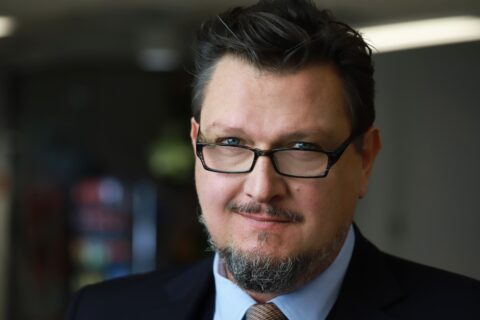
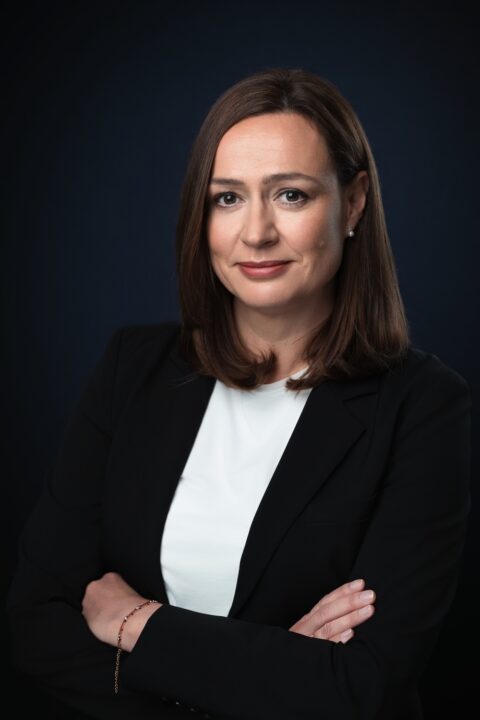
We talk to Marek Błędowski, Vice-President of the Management Board of Apsys Polska responsible for leasing, about leasing strategy, tenant mix and the challenges of developing both local centres and the largest retail destinations.

Apsys has been operating on the Polish market for 30 years. What determines the successful leasing of a shopping centre today?
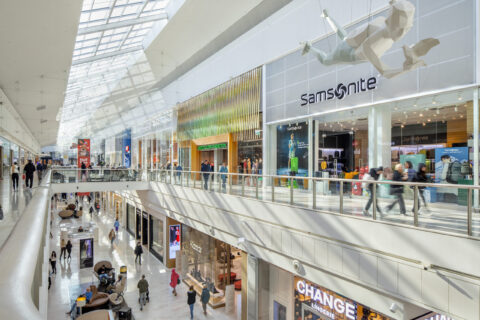
Over those 30 years, we have been actively involved in the development of the modern retail market in Poland. We started at a time when simple centres with a hypermarket and a small shopping arcade dominated. Then came the era of multifunctional urban destinations, the expansion of global brands and the growing importance of food and entertainment. The market was also changed by the rapid growth of e-commerce, the experience of the pandemic and constantly evolving customer expectations. Today, we are responsible for leasing a portfolio of more than 700,000 sq m in 9 cities, which welcomed 104 million visitors last year.
Above all, these three decades have taught us one thing – there is no universal recipe for successful leasing. Every property operates in a different environment, meets different customer needs and plays a different role in its local market. That is why we do not start with ready-made solutions, but with understanding the place – its potential, customers, competition and the owner’s goals. Only on that basis do we build a leasing strategy and design the tenant mix.
The time perspective is equally important. Leasing does not end when a centre opens or reaches a high occupancy rate. The offer must constantly evolve, because brands change, customer expectations change, and so does the way people use shopping centres. Our job is to spot these changes and respond to them early enough.
The Apsys portfolio includes both large urban destinations and local and regional centres. Are there leasing principles that work regardless of the scale of the property?
There are principles that remain unchanged. They concern the way we work, not specific solutions. Whether we are talking about a property in a large city or a centre serving a community of several tens of thousands of people, the same requirements apply to the quality of data and its analysis, the same responsibility for results, the same principle of partnership with the owner and tenants, and the same care for creating long-term property value. Across the entire portfolio, we now handle more than 1,800 leases, and each of them requires the same diligence, regardless of which property it was signed for. In this respect, we make no distinction between properties.
What changes is the strategy. Building the offer of a regional centre, which has to attract customers from a wide area and offer brands worth travelling from other cities for, is different from building that of a local centre, which primarily meets residents’ everyday needs. Priorities differ, as do the pace of change, the share of individual categories and, often, the proportions between large chains and local concepts. That is why we do not believe in ready-made templates. Every property plays a different role in its surroundings, and successful leasing starts with understanding that role.
What is the biggest challenge in building the offer of a local centre?
The biggest challenge is to build an offer that is both complete and precisely tailored to the needs of the local community. In large destinations, customers can choose from many brands in the same category, and they also come for inspiration, food or entertainment. In a smaller centre, every leasing decision carries more weight. One poorly chosen tenant can upset the balance of the entire offer. That is why in local centres it is not about the number of brands, but about choosing the right ones. The key is to understand customers’ everyday habits and the potential of the local market, and to create a tenant mix in which each tenant plays a specific role and complements the others. It is this precision that most often determines a property’s success.
Where does Apsys start when working on a leasing strategy for a property it has taken over for management?
We always start with data analysis, but numbers alone are never enough. We look at how the property functions – how footfall is distributed, which zones perform best, what results individual categories and tenants achieve, and where we see untapped potential.
At the same time, we talk to the owner to understand their business goals, investment horizon and long-term vision for the property. Conversations with tenants are also very important. They observe customer behaviour every day and are often the first to notice the changing needs of the market.
We also analyse the competitive environment, the potential of the local market and the needs of residents. We are interested not only in what already works, but above all in what is missing in a given location. We do not look for tenants to fill vacant units. First, we define the role the centre is to play in its market and for its community. Only then do we build the leasing strategy and the tenant mix that will fulfil that role.
That is precisely why we do not believe in ready-made templates. Two properties of a similar size may require completely different strategies, because they operate in different environments, have different customers and meet different needs. Our role is to understand this and translate it into an offer that is attractive to both customers and tenants.
How does leasing strategy change depending on the character and scale of the property?
The starting point is always the answer to one question: why do customers come to this particular property? That is what the leasing strategy depends on. In the largest destinations, the key role is played by brands that make the place unique – flagship stores, launches of new concepts or an offer customers are willing to travel for, even from another city. In local centres, on the other hand, what counts is everyday shopping, services and convenience.
In 2025, across the Apsys portfolio, we signed and renewed a total of 281 leases, including 88 in fashion, 58 in food and beverage and 40 in services. These figures clearly show that we do not follow a single leasing model – every decision stems from the needs of a specific property and its customers.
Regardless of the scale of the property, one principle remains unchanged. Recognisable brands provide stability and are an important draw for customers, while local concepts give a place its individual character and build its identity. The role of the leasing department is to find the right balance between the two. Our job is not simply to lease space. Our job is to build an offer that works as a coherent ecosystem and meets customers’ needs for many years.
You often say that there is no such thing as “bad square metres”. What can a good manager do with a unit or part of a centre that is not realising its potential?
First of all, you have to understand why this is happening. Sometimes a unit is located away from the main footfall route, sometimes the neighbouring tenants do not support a given concept, and sometimes the problem is simply its visibility or the way the whole zone functions. These are completely different situations, and each requires a different solution.
That is why the right diagnosis is key. Sometimes it is enough to change the neighbouring tenants, improve exposure, redesign the shopfront or change the function of a given part of the centre for the space to start performing in a completely different way.
In such situations, flexible solutions work well – shorter leases or pop-up concepts. For the tenant, this means a lower entry risk, and for us, an opportunity to test how a given concept performs in a specific location. Such solutions encourage brands that were not previously present in shopping centres to enter them, including concepts that have so far grown mainly in e-commerce and want to expand into bricks-and-mortar retail. A great example is what we did at Galeria Katowicka, where a local sports club opened a pop-up store. Everything worked here – the location near the railway station, which makes it easy for customers to find, but also the proactive approach of the tenant, who organises various events and attracts crowds of customers. The results are so good that we are considering a longer, permanent partnership.
Data is extremely important, but it will not tell you everything. A report will show that a unit is underperforming, but it will not explain why. You cannot read that from a spreadsheet – you have to go out into the mall, observe customers and understand how they use the space.
That is why I often say that there are no bad square metres. There are spaces that require a different idea and a different approach. Very often, it is precisely there that we manage to introduce a concept that would never have appeared in an obvious location.
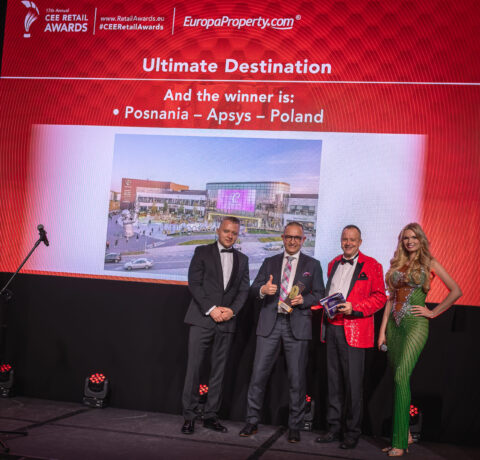
Manufaktura and Posnania are mature properties with 100% occupancy. It might seem that managing their offer is easy today. Why does full occupancy not allow you to switch leasing to “autopilot”?
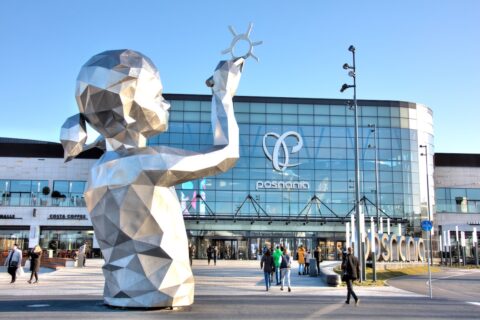
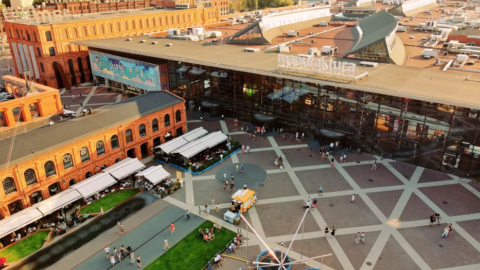
Full occupancy is not an end in itself. It is the result of a well-built strategy pursued consistently over many years. Posnania has been operating for ten years, Manufaktura for twenty, and the fact that both properties ended 2025 with 100% occupancy is no coincidence. It is the result of hundreds of leasing decisions taken with long-term development in mind. By comparison, the average occupancy rate in Poland’s eight largest agglomerations exceeded 97%, which is already a very good result.
Paradoxically, it is precisely in a fully let property that the leasing team’s work becomes even more demanding. Leases expire, brands change their strategies, the condition of individual tenants varies, and customer expectations evolve faster than lease terms. Building a tenant mix is not a project that can ever be considered finished. It is a process that requires constant planning and staying ahead of change. You cannot wait for a unit to become vacant and only then think about what comes next.
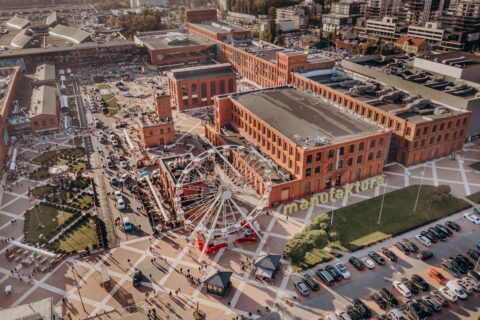
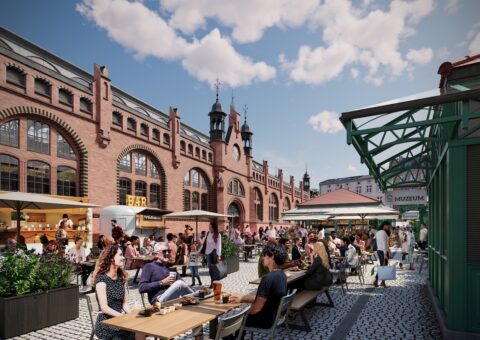
In the case of Manufaktura and Posnania, we pay particular attention to keeping the tenant mix balanced and responsive to both today’s and future customer needs. This requires constant market monitoring, analysis of new trends and readiness to make changes before they become a necessity. That is why, for example, Manufaktura’s offer has recently been expanded with a new burger restaurant, and last summer, in response to customer needs, Manufaktura Wspinania opened – a climbing venue that has perfectly complemented the entertainment and sports offer. Every leasing decision must strengthen the whole – not just an individual unit, but the attractiveness of the entire centre.
The art is not to lease everything. The art is to lease wisely and build an offer that will develop together with the market and remain attractive for many years.
Which examples from the Apsys management portfolio best show that every property requires a different approach?
Each of our properties plays a different role in its market, which is why no two leasing strategies are the same.
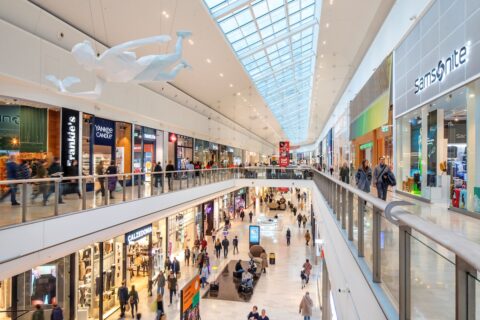
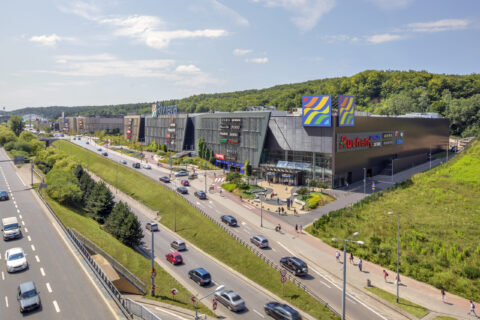
Riviera in Gdynia is an example of a regional destination that attracts customers from across the Tricity and Pomerania. When we took over the management of the property almost three years ago, we began a consistent re-leasing process, focusing on developing new and existing tenants in parallel. We selected new brands in line with the target positioning. We strengthened the fashion segment by introducing brands such as La Mania and Weekend Max Mara, food and beverage with the American restaurant chain Popeyes, and entertainment with a unique IMAX. A key element of the process was the reconfiguration of an underperforming zone of the centre through the introduction of attractive new tenants such as HalfPrice and FlyingTiger, as well as the relocation, enlargement and modernisation of the NewYorker and 4F stores, which allowed the brands to roll out their latest concepts and formats. We also applied category clustering – grouping brands from the same category close to one another. In a property like this, the leasing strategy must constantly evolve. Customers expect not only the presence of the biggest brands, but also new arrivals and an offer that reflects current trends.
Kometa in Toruń, on the other hand, is a first-generation property – and that is precisely its strength. It would be easy to try to make it resemble newer shopping centres, but that is not what an effective strategy is about. Kometa meets residents’ everyday needs; units such as Sokołowska Spiżarnia and Piekarnia Grochola, as well as service tenants such as a laundry, play an important role here, and it is precisely this function that we consistently strengthen. We do not force change on the property – we develop its strongest features and build an offer that meets the needs of the local market.
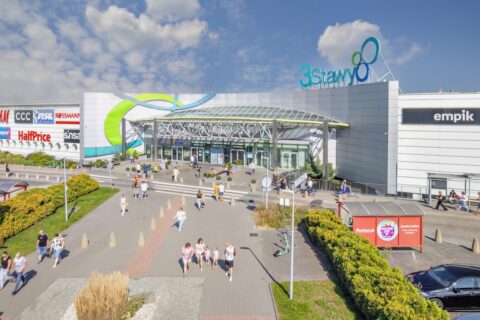
Another example is 3 Stawy in Katowice, which recently joined our portfolio. Here, before we make decisions about the direction in which to develop the offer, we want to get to know the property, its customers, tenants and the local market well. Only then will we build a leasing strategy that responds to the real needs of this particular property.
These three examples show that we do not believe in universal solutions. Every property has its own history, its own role in the local market and its own customers. That is why an effective leasing strategy always starts with understanding the place, not with implementing ready-made templates.
What should the owner of a small or medium-sized property expect today from a partner responsible for leasing?
Above all, foresight. A good leasing partner does not just react to change, but tries to anticipate it. They monitor the market, brand strategies and customer behaviour in order to prepare a plan for developing the offer early enough.
Second – advice. The owner does not just need a report on signed leases. They need recommendations: which categories are worth developing, which brands can strengthen the offer and which decisions will be best for the development of the property as a whole.
Third – effectiveness. Even the best strategy has no value if it does not translate into concrete results. The role of the leasing team is to secure tenants effectively, maintain high occupancy and build an offer that is attractive to both customers and brands.
And finally – responsibility. Good leasing does not end with signing a lease. It means taking responsibility for how the offer will perform in the longer term and whether it will support the development of the entire centre.
How will shopping centre leasing change in the coming years?
The shopping centre market in Poland is mature today. In the coming years, competitive advantage will not come from building new properties, but from the ability to develop those that already operate. Repositioning, modernisation and the consistent adaptation of the offer to changing customer needs are becoming increasingly important.
In leasing, this means even greater flexibility. We are seeing the continued growth of food and beverage, services and entertainment, but also greater openness to new forms of cooperation. Shorter leases and pop-ups are no longer the exception, but are becoming one of the natural tools for building the tenant mix. They will make it easier to develop new brands, including those that have so far operated mainly in e-commerce.
Data will also play an increasingly important role. We will analyse customer behaviour and the performance of individual categories faster, enabling leasing decisions to be made almost in real time, rather than only at the end of the season.
One thing, however, will not change. The success of a shopping centre will still depend on how well it understands its customers. Technology, data and new tools can support decision-making, but they cannot replace the ability to build an offer that meets the real needs of the local market.